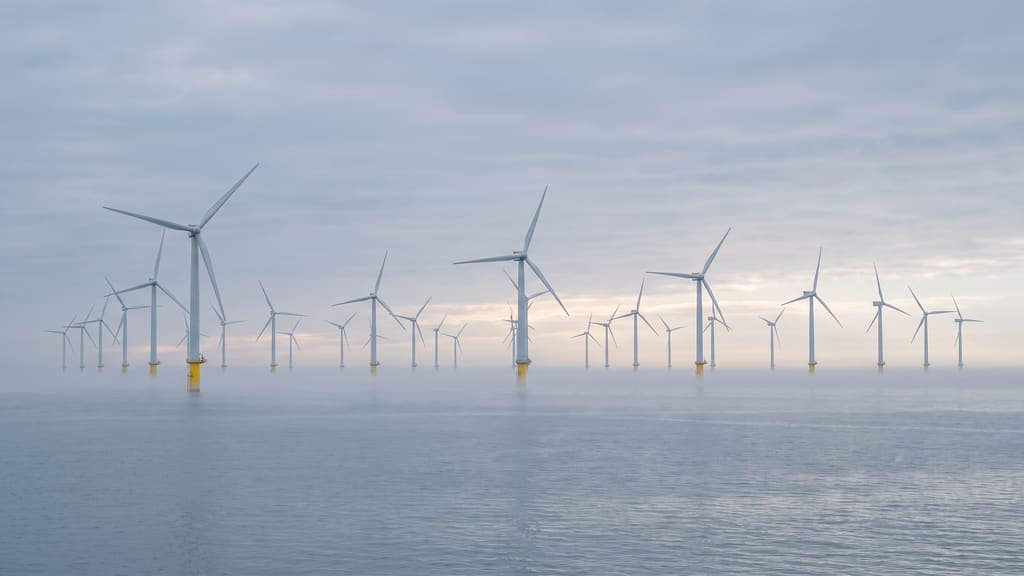
The project in full
Three phases, 229 turbines and 3,435 megawatts on a bank in the central North Sea.
Kyleness takes its name from the headland the export cable comes ashore beneath, where the haar, the cold sea fog off the North Sea, sits over the coast for days at a time.
The wind farm is 87 kilometres east of the Northumberland coast, on a shallow bank in the central North Sea. The lease covers 619 square kilometres and the water runs between 27 and 44 metres deep, which is shallow enough for fixed monopile foundations across the whole site.
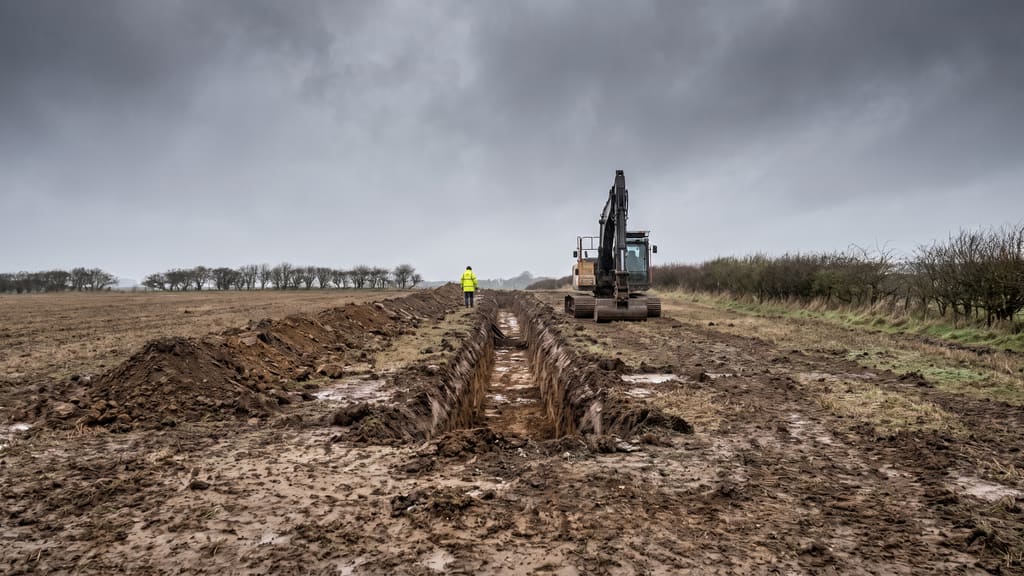
We agreed the seabed lease in 2021 and won consent for all three phases in 2024. Onshore works began this year at the landfall and at the grid connection point in south east Northumberland. Offshore construction starts in 2028.
The three phases
Phase A
1,215 MW81 turbines on the western half of the bank, closest to the landfall. First power in 2031.
Phase B
1,155 MW77 turbines north east of Phase A, sharing the same export corridor. First power in 2032.
Phase C
1,065 MW71 turbines on the deepest ground at the eastern edge. First power in 2034.
Timeline
| Year | Stage |
|---|---|
| 2021 | Seabed lease agreed for the full 619 square kilometre site. |
| 2024 | Consent granted for all three phases in one decision. |
| 2026 | Onshore works start at the landfall and the grid connection. |
| 2028 | First monopiles go in on Phase A. |
| 2031 | First power reaches the grid from Phase A. |
| 2034 | All three phases running, operations base fully staffed. |
The joint venture
Merrowfield Energy
55 per cent
A UK developer with onshore wind and grid connection work behind it. Merrowfield holds the lease, leads consenting and runs the onshore programme, from the landfall works through to the community fund. Its project team sits in Newcastle and Blyth.
Skarvholm Energi
45 per cent
A Norwegian offshore developer with fifteen years of North Sea work behind it. Skarvholm leads marine construction and vessel contracting, and will run the operations and maintenance base at Blyth from 2031.
We are not the first wind farm on this coast and we will not be the last. What we can do is finish on the dates we have published, buy as much of the work as we can from firms in the North East, and answer the phone when somebody rings about a cable route or a fishing ground.