How Kyleness gets built
Steel into the seabed, cable along it, turbines on top, then a long test.
Offshore construction is less complicated than it looks from the beach. It is four pieces of work, in a fixed order, done from vessels that cost a fortune a day and only work in decent weather.
Foundations
Every turbine on Kyleness stands on a single steel tube driven into the seabed. A monopile. The largest are 11 metres across at the base and weigh a little over 2,000 tonnes before the transition piece goes on.
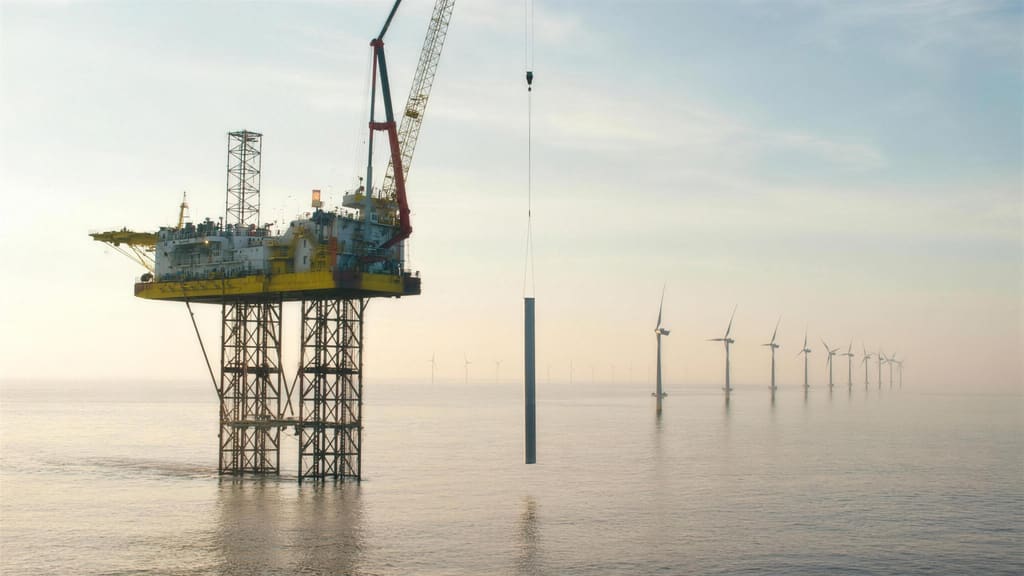
A jack up vessel lifts each pile upright, sets it on the seabed and drives it in with a hydraulic hammer. In a good week a crew places nine or ten. In a bad week they place none. That is normal offshore work rather than a sign that something has gone wrong.
229 monopiles, driven 32 to 47 metres into the seabed
Array cables
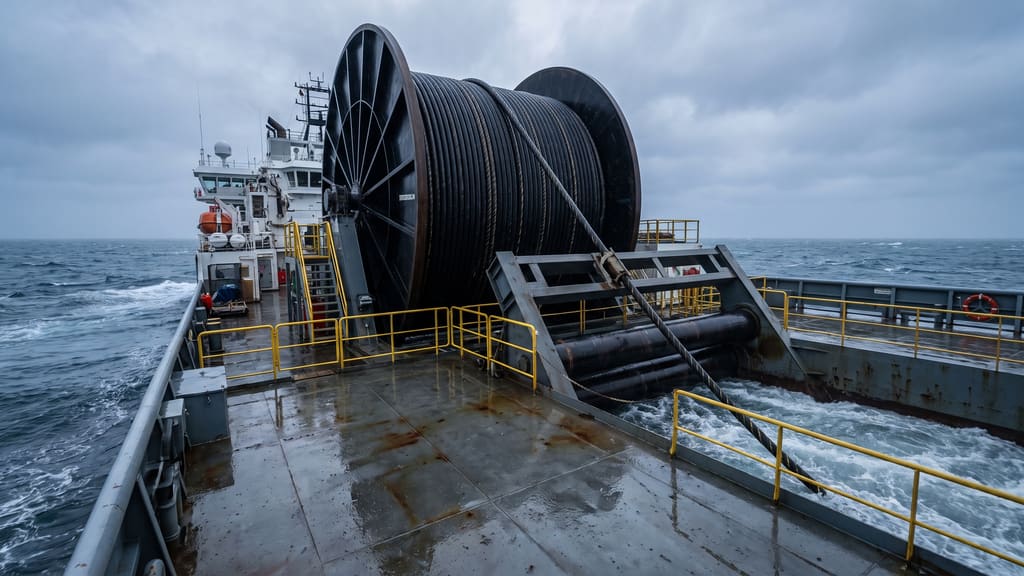
Turbines are wired together in strings with 66 kV array cable, laid on the seabed and buried wherever the ground lets us. From the end of each string the power runs to one of three offshore substations, then along the export corridor to the landfall.
Cable work is the quiet part of an offshore build and the part that most often slips. We survey the full route before anything is laid, then bury to a depth agreed with the fishing fleet so gear can work over the top. Where burial is not possible the cable is rock covered and the position published.
Just over 640 kilometres of array cable across the three phases
Turbines
The machines are 15 MW class turbines. Towers, nacelles and blades arrive at a marshalling port, are pre assembled on the quay and go out on a jack up vessel. Each turbine takes four lifts.
We have not named the maker. The contract for Phases B and C is not signed, and it may not be the same maker as Phase A.
15 MW class turbines, 242 metre rotor, 229 machines in total
Commissioning
A turbine is not finished when the last blade is bolted on. It has to be energised, tested through its control system, run up under load and handed to the operations team. Commissioning crews work off a service operation vessel, a fortnight at a stretch.
Phase A comes online in blocks rather than all at once, which is why our first power date and our full output date are three years apart across the whole site.
First power 2031, all three phases running by 2034